Skip to MainYour Seller System

Stop buying supplies that almost fit

Packing Supplies for Small Online Sellers

Packing supplies are the mailers, boxes, tape, labels, and fill that get a real order out the door without damage, wasted postage, or a shelf full of mistakes.

Start with the order on the table. A folded shirt, a paperback, a boxed cosmetic, and a mug do not need the same package just because one bulk bundle looks convenient.

Pack one repeat order first. The right supply list usually shows itself when you see what has to bend, what can break, and what still rattles.

Start here

Build the package choice before you buy supplies

Before adding another cart full of mailers or boxes, walk one typical product from shelf to sealed package. You are looking for the decision that actually changes the supply list.

Quick decision path

Start with what the item cannot tolerate: bending, crushing, movement, moisture, or wasted space.

If today's order looks like thisDo this firstThen decide
Soft goods that can bendFold or bag the item the way it will actually ship, then measure the thickest pointCompare poly mailers only if the closure still has room
Flat products that cannot bendDecide whether the risk is bending, corner damage, or light scuffingChoose rigid mailers, bubble mailers, or boxes based on that failure risk
Rigid, boxed, or fragile productsAdd the real protection first, then measure the protected sizeChoose the smallest practical box and only enough fill to stop movement
The packed box still rattlesShake the closed sample gently and find whether the box is too large or the fill is wrongCompare void fill only after the box size is close
  1. Group products by structure

    Do this because: a shirt, a sticker sheet, a boxed serum, and a mug fail in different ways. Sorting by structure keeps one package type from doing jobs it cannot do.

    Next move: make small piles for soft, flat or bend-sensitive, already boxed, and fragile items.

  2. Measure the protected item

    Do this because: the package has to fit the folded, wrapped, bagged, or cushioned product, not the clean product photo in the listing.

    Next move: pack one sample order and write down the shipping-ready length, width, height, and closure room.

  3. Choose the outer package

    Do this because: the outer package should match the damage risk before it matches the neatest shelf bundle.

    Next move: use poly mailers for flexible soft goods, padded or rigid mailers for small protected items, and boxes when the product needs structure.

  4. Stop movement inside the package

    Do this because: a strong box can still fail when the product thumps from wall to wall.

    Next move: close the sample package, shake it gently, and add only the fill needed to hold the item steady.

  5. Buy small before bulk

    Do this because: the first bulk order is where small sellers accidentally create six months of supply clutter.

    Next move: buy enough to test repeat sizes before chasing bulk pricing.

If the sample order still feels awkward, fix that step before you add another supply category.

Where to go next

Go to the page that matches the thing still causing bad package choices.

GuideUse it whenNext move
Mailer Size ChartsThe package technically closes, but the item is squeezed, floating, or pushing you into odd sizes.Measure the shipping-ready shape before buying bulk mailers or boxes.
Packing ToolsYou know the right supply, but measuring, sealing, cutting, or weighing turns every order into a pause.Fix the repeated tool step after the package type is clear.
Shipping StationThe supplies fit, but the room flow still makes orders slow, messy, or easy to forget.Put supplies, scale, labels, and outgoing orders in one reachable path.
Label PrintersThe package is ready, but labels slow the handoff or print in the wrong format.Fix label format, printer placement, and supply fit before replacing hardware.

Before you buy anything, avoid these mistakes

These supply buys feel efficient in the cart and annoying once they take over a shelf.

MistakeWhy it slows or hurts youDo this instead
Buying a bulk bundle before proving repeat sizes.Half the supplies fit poorly, sit unused, or pressure you into shipping in the wrong package.Measure a few protected repeat products and buy a small starter set first.
Choosing the outer package only because the item fits.Rigid, fragile, or bend-sensitive items can fit and still arrive damaged.Choose by structure and damage risk before size alone.
Buying more box sizes when the real problem is movement.You store more boxes while products still slide, thump, or need better cushioning.Pick a close box size, then use fill only to stop the movement that remains.
Buying branding extras before the shipping basics work.The package looks nicer while tape, protection, or package fit still fails.Fix mailers, boxes, tape, labels, and protection before inserts or decorative touches.

Supplies worth comparing once the sample package works

Some links on this site may be affiliate links. Use the workflow above first, then compare the one supply category that fixes the package you actually tested.

Soft goods

Poly Mailers

Use it when: folded clothing, fabric goods, or other soft items can bend without damage and do not need crush protection.

Check before buying: usable inner space after folding, closure room, opacity, thickness, waterproofing, and where the bundle will live.

Skip if: the item has corners, structure, sharp edges, fragile parts, or any reason it should not be bent.

Watch out: mailer dimensions can be outside measurements. Leave room for product thickness and the adhesive strip.

Next move: test one packed item before stocking multiple sizes.

Light padding

Bubble Mailers

Use it when: small goods need light cushioning, but the item is not fragile enough to need a box.

Check before buying: usable inside dimensions, padding thickness, closure room, bend risk, and whether the product corners show through.

Skip if: the item can crush, bend, leak, or needs real corner or side protection.

Watch out: padding eats into the usable space, so the listed size can feel generous until you pack the real item.

Next move: compare bubble mailers after the protected item still slides in without forcing the seal.

Bend resistance

Rigid Mailers

Use it when: prints, photos, stickers, booklets, or thin media need bend resistance more than soft cushioning.

Check before buying: usable inner dimensions, board rigidity, closure, corner protection, and whether you need a backing insert.

Skip if: the item is bulky, crushable, dimensional, or needs cushioning on several sides.

Watch out: rigid mailers protect against bending; they are not a substitute for a box when the item can crush.

Next move: compare rigid mailers when bend risk is the main problem you are solving.

Structured protection

Corrugated Boxes

Use it when: the product is rigid, fragile, already boxed, heavy, or needs protection on multiple sides.

Check before buying: inner dimensions, board strength, storage footprint, closure, fill needs, and dimensional-weight risk.

Skip if: a soft item ships safely in a mailer and the box would add empty space, fill, and storage pressure.

Watch out: oversized boxes need more fill and can trigger dimensional-weight problems on large, light packages.

Next move: compare boxes after measuring the protected product, not the bare product.

Movement control

Void Fill

Use it when: the item moves inside a close-fitting box or needs cushioning around a fragile surface.

Check before buying: fragility, storage space, mess, added weight, recyclability, and whether the fill blocks movement or cushions impact.

Skip if: the package is already snug and the fill is only decorative or makes the box harder to close.

Watch out: some fill cushions; some only blocks movement. Match the material to the product risk.

Next move: compare fill only after the box size is close enough to make the fill useful.

Box closure

Packing Tape

Use it when: box flaps need reliable sealing without pressing the same seam three times.

Check before buying: width, adhesive type, thickness, noise preference, dispenser fit, box dust, and storage temperature.

Skip if: you rarely ship boxes and your current tape closes cleanly without lifting.

Watch out: cold garages, dusty boxes, and poor dispenser fit can make cheap tape feel expensive fast.

Next move: compare tape once box shipping is common enough that bad tape slows the day down.
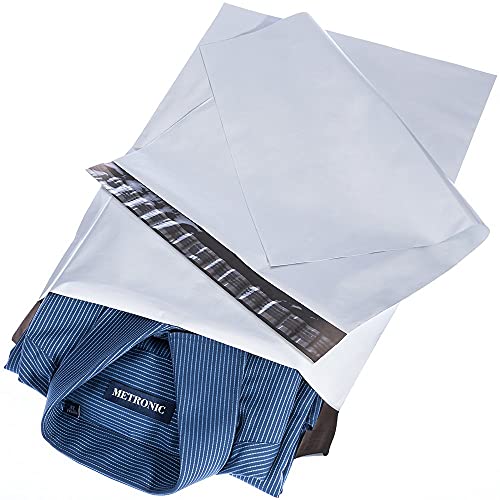
Metronic White Poly Mailers 14.5x19 100 Pack, Large Shipping bags Self-Seal Shipping Envelopes , Packaging Envelope for Small Business, Boutique, Clothing

Starter clothing poly mailer option

Metronic White Poly Mailers 14.5×19 100 Pack, Large Shipping bags Self-Seal Shipping Envelopes , Packaging Envelope for Small Business, Boutique, Clothing

Best for: Low-volume clothing sellers who have tested one folded item and want a smaller starter pack before stocking multiple mailer sizes.

Avoid if: Skip if the item is rigid, fragile, sharp, boxed, crushable, or needs bend resistance.

Check usable inner space, closure room, thickness, opacity, waterproofing, and storage space before buying.

Check poly mailer sizes on Amazon
Eupako 8x6x6-Small-Shipping-Boxes-30-Pack-Brown-Corrugated-Box-Mailers, Cardboard Boxes for Packaging Small Business, Mailing

Small corrugated shipping box option

Eupako 8x6x6-Small-Shipping-Boxes-30-Pack-Brown-Corrugated-Box-Mailers, Cardboard Boxes for Packaging Small Business, Mailing

Best for: Sellers whose protected product fits a small box better than a mailer and who have checked inner dimensions before stocking boxes.

Avoid if: Skip if a soft item ships safely in a mailer or the box creates empty space, extra fill, or unnecessary storage pressure.

Check inner dimensions, board strength, closure, fill needs, storage footprint, and dimensional-weight risk before buying.

Check shipping box options on Amazon

Last updated: May 27, 2026.